
What Is a Zero-Click Search?
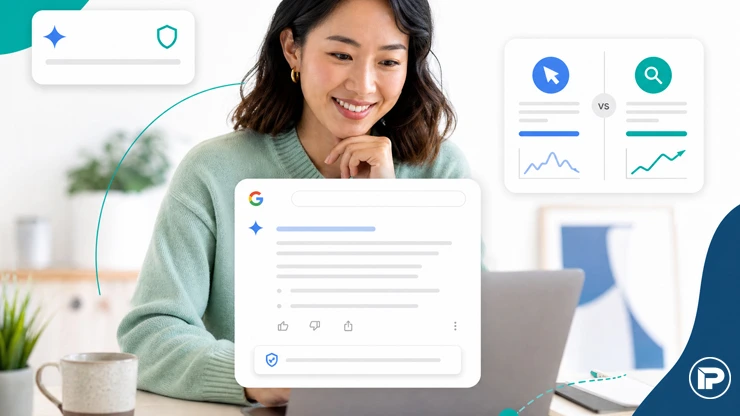
A zero-click search is when the search results page provides the answer directly, so you do not need to click through to a website. It shifts visibility from clicks to prominence in the results themselves. In other words, a zero-click search occurs when a search engine answers a user’s query directly on the results page, eliminating the need to visit a separate website. These answers may appear in featured snippets, knowledge panels, local packs, “People also ask” sections, AI-generated summaries, calculators, or other enhanced search features. As a result, visibility is no longer measured only by website traffic or click-through rate. It also depends on whether a brand’s content is selected, cited, or represented prominently within the search results.
Why zero click searches matter for small service businesses
Zero-click results impact brand visibility, perception, and discovery. For a local service business, appearing in knowledge panels or featured snippets can build trust even when the user does not visit your site.
Direct answers
Google and other search engines surface concise responses for common questions. If your business clearly answers these questions, you can earn short form exposure above the fold.
AI generated answers
AI overviews and answer engines synthesize information from multiple sources. Clear, well structured content helps your entity appear in these AI provided summaries.
Maps and local results
Local packs and knowledge panels place businesses in front of nearby prospects. Being accurate in Google Business Profile and local data feeds improves your visibility without a click.
Search features
People Also Ask, Knowledge Graph, and other on page features can capture attention early in the user journey. Optimizing for these features expands reach without a visit.
How zero-click search changes the traditional SEO funnel
- Search and then visit a site becomes search and then the user sees an answer and recognizes your brand.
Who is most vulnerable to zero-click formats
- Informational services
- Professional services
- Local service providers
- Comparison driven industries
How to benefit from zero-click visibility
- Brand mentions and citations
- Reviews and local profiles
- Authoritative content and structured data
Turning visibility into leads without an initial click
- Provide accurate, concise answers
- Keep NAP consistency and robust local profiles
- Use accurate structured data to help search engines understand your business and content
Next: a practical look at applying these concepts in your business plan, including quick wins you can implement today.
1. What does zero click search mean?
Zero click search occurs when the search results page provides the answer directly, so you do not need to click through to a website. It shifts visibility from on site clicks to on page prominence.
For a small service business, this means your brand can appear in places like knowledge panels, featured snippets, and local results even if a potential customer never visits your site. The key is being found in these formats and delivering accurate, helpful answers directly in the search results.
To make zero click work for you, focus on clearly structured data that engines can parse. Use concise, authoritative responses to common questions, and align your local information so your business appears consistently across platforms.
Practical steps to start small include:
- Ensure your business name, address, and phone number are consistent across Google Business Profile and local listings.
- Publish short, clear answers to frequently asked questions about your services.
- Keep your business information accurate in Google Business Profile and, when applicable, claim your knowledge panel and suggest verified corrections through Google.
Next, explore how zero click visibility interacts with branding and lead quality to determine where to invest resources for the highest impact.
2. Are zero-click searches bad for small businesses?
Zero-click searches are not inherently harmful to a local service business. They shift where visibility happens, not the overall value of your marketing. The objective is to tailor your strategy so you still attract qualified leads, even when the main outcome is not a click.
What matters most is how your brand appears in zero-click moments. If you show up in knowledge panels, local packs, or featured snippets, you can influence perception and prompt direct inquiries without a site visit. The risk comes from relying solely on on page traffic for leads and neglecting other visibility channels.
- Maintain a strong local presence. Consistent NAP data and active local profiles support zero-click visibility and credible signals.
- Invest in authoritative content. Clear, concise answers to common questions reinforce trust and support future engagement when someone clicks.
- Monitor brand perception. Positive reviews and reputable citations can drive inquiries even if users do not land on your site.
Actionable step: map the top five service questions your customers ask and craft one sentence, SEO-friendly answers for each. Align these with structured data and update your local profiles to reflect the responses consistently.
3. Can businesses generate leads without a website click?
Yes. You can generate leads even when a user does not click through to your website. The key is to shape how your brand appears in search results and guide direct inquiries from those appearances. This approach builds trust and prompts action right on the results page.
What to focus on for non click leads:
- Knowledge panels and local packs that show your business details, reviews, and services, which can drive calls or messages directly from the results page.
- Featured snippets and AI Overviews that provide clear answers, establish authority, and boost brand recognition for future searches.
- Reviews and citations that reinforce credibility, increasing the chance a user contacts you without visiting your site.
Practical steps to pursue non click leads:
- Keep NAP data consistent across all local profiles and maps listings so contact options appear reliably in search results.
- Publish concise, question based content that answers common service inquiries and can surface in knowledge panels.
- Encourage reviews from satisfied customers and respond promptly to maintain a strong brand impression in search results.
Next, plan to measure outcomes beyond clicks by tracking direct inquiries, call activity, and branding signals in tools like Google Search Console and local listing dashboards.
4. What types of searches are most likely to become zero click searches?
Certain query types tend to trigger zero click results more than others. Understanding these helps you tailor your local marketing without relying on site visits.
- Information questions with clear, factual answers such as service definitions, hours, or locations.
- Near me queries and local intent that surface knowledge panels, local packs, and direct contact options.
- Common service questions that can be answered briefly in a snippet or card, reducing the need to open a site.
- Brand and product queries where search engines rely on known entity signals to present concise summaries.
- Conversions or how to queries that yield step by step answers in featured snippets or AI Overviews.
For a small service business, the takeaway is to provide concise, authoritative answers that align with structured data. When your information appears in zero click formats, you can maintain credibility and prompt future engagement without requiring a site visit.
Next, map these query types to the questions your customers actually ask and ensure your knowledge panels and local profiles reflect accurate, ready to serve answers.
5. How should businesses optimize for zero-click search?
Zero-click search happens when search results answer the query directly on the results page. Your goal is to be a trusted, concise source that nudges users to contact you or take a direct action without visiting your site.
How to act now
- Align structured data with common questions create clear, brief answers and use schema markup only when it accurately matches the page type. Do not use Q&A markup for an ordinary business FAQ page, and do not rely on FAQ markup for Google Search rich results.
- Strengthen local signals keep NAP consistency across profiles, optimize Google Business Profile, and keep service areas and hours up to date to support local packs and direct contact options.
- Curate authoritative, concise content answer the top questions customers ask in one to two sentences and mirror what appears in knowledge panels or AI Overviews.
- Encourage credible reviews actively collect reviews and respond to them; reviews influence trust signals shown in search results.
- Improve on brand visibility build consistent brand mentions across directories and citations to strengthen entity signals that search engines use for zero-click results.
Practical steps
- Audit top service questions and craft one-sentence answers using exact wording customers use.
- Audit and update all local profiles for consistency and completeness.
- Support accurate knowledge panel information through authoritative, verifiable sources, and claim the panel to suggest corrections when that option is available.
- Monitor how your brand appears in search results and adjust responses to maintain clear, actionable options.
Next useful step
Use Google Search Console‘s Search and generative AI performance reports, together with local listing dashboards, to track visibility and how impressions translate into direct inquiries or calls.
6. Is traditional SEO still useful when searches do not produce clicks?
Yes, traditional SEO remains relevant even when many searches don’t result in a click. Visibility signals influence brand perception, credibility, and future engagement. When your brand appears in a zero click result, the way you present information and how easy it is to contact you from the results page shape user impression.
Traditional SEO supports long term lead generation by building authoritative content, solid schema coverage, and reliable local signals. This work helps your knowledge panels, local packs, and AI Overviews surface accurate, shareable information over time.
- Content that answers core questions improves your chances of appearing in featured snippets and knowledge panels, increasing brand exposure even if a user does not click.
- Structured data discipline helps search engines understand your services, locations, and hours, supporting zero click surfaces and future intent based journeys.
- Consistent local signals like accurate NAP data and complete profiles reinforce trust across maps and local results.
Next, map your existing SEO to zero click opportunities. Identify which queries your business can own in knowledge panels and ensure your content aligns with the questions most likely to trigger zero click formats.
The signal is the truth. The noise is what distracts us from the truth.
FAQs
1. What does zero click search mean?
A zero click search occurs when the search results page provides the answer directly, so you do not need to click through to a website. It changes where visibility happens within the search results itself.
2. Are zero click searches bad for small businesses?
Not inherently. They shift visibility to knowledge panels, featured snippets, and local results. The goal is to attract qualified users to engage further when appropriate.
3. Can businesses generate leads without receiving a website click?
Yes. By building authoritative content, accurate local data, and positive reviews, a business can prompt direct inquiries or calls even if a visitor does not visit the site initially.
4. What types of searches are most likely to become zero click searches?
Informational questions about services, locations, hours, prices, and simple how to queries often appear as zero click results. Local intent queries also show up in knowledge panels and maps.
5. How should businesses optimize for zero click search?
Focus on entity signals, accurate NAP data, and structured data. Maintain consistent local profiles, gather reviews, and create concise informational content that aligns with common user questions and local intent.
6. Is traditional SEO still useful when searches do not produce clicks?
Yes. Traditional SEO supports the visibility stack that enables zero click outcomes. Clear on page structure, reliable local data, and authoritative content help sustain recognition and future engagement when a user does click.