


Google reviews are one of the highest-leverage assets in local seo marketing. They influence clicks, calls, direction requests, and conversions. In many local searches, reviews are the deciding factor between two businesses that look similar on paper.
That is exactly why review fraud exists.
Some businesses are buying reviews, some are quietly incentivizing them, and some are outsourcing reputation management to vendors who take shortcuts. Google knows this, regulators know this, and enforcement has escalated.
How fake Google reviews are actually bought
Paid and manipulated reviews usually fall into a few buckets. Understanding these patterns matters because they often share the same footprints that trigger removals.
- Direct purchase (review farms): packaged “five-star reviews” delivered by accounts with thin or suspicious history.
- Incentivized reviews: discounts, gift cards, freebies, contest entries, or perks tied to leaving a review.
- Employee, friend, or contractor padding: reviews from people who never used the service, sometimes from the same workplace network or repeated device patterns.
- Negative attacks and extortion: spammy 1-star reviews followed by offers to remove them for payment, or competitor-driven review attacks.
A common misconception is that the only risk is losing a few reviews. In reality, the bigger risk is broader enforcement, including restrictions that slow or block review momentum and damage trust signals over time.
What Google is doing about review fraud
1) Automated detection at scale
Enforcement is largely automated. That means review schemes can appear to work briefly, then get removed later as systems connect the dots across accounts, devices, and behavior.
2) Trust signals, patterns, and clusters
In practice, fake reviews tend to leave patterns. The most consistent patterns fall into three areas:
- Account trust signals: new accounts, low activity, odd review history, unrealistic posting behavior.
- Network and device signals: clusters tied to repeated devices, repeated IP ranges, VPN-like behavior, or unnatural proximity to each other.
- Content and timing signals: templated phrases, unnatural bursts, overuse of generic praise, repeated keywords, and too many five-star reviews without real details.
Most businesses focus on “how many reviews” they got. Google tends to focus on whether the overall behavior looks like real customers behaving naturally.
3) Enforcement is more than deletions
When a profile triggers enough risk signals, the impact can go beyond removing reviews. Businesses often report symptoms like delayed publishing, sudden drops, or review collection that feels “stuck” even when customers say they posted.
How fake reviews get removed (and what businesses misunderstand)
We gained practical clarity on removal behavior by comparing three different scenarios that are commonly confused:
- Fraud enforcement: reviews are removed because they violate policy or match fraud patterns.
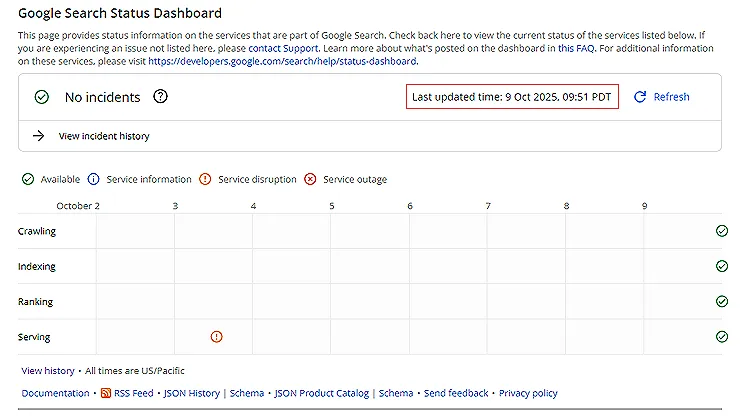
- System delays or disruptions: reviews appear missing temporarily and later show up.
- Normal filtering behavior: reviews can post but not immediately appear in totals, or visibility changes as systems re-check trust signals.
If you do not separate these, you can misdiagnose the problem and make it worse. The fastest way to escalate risk is to respond to lost reviews by rushing to replace them with a burst of new reviews from questionable sources.
Having a sitemap helps us discover and index your content faster.
The most important insight: optimize for reviews that survive
Here is the mindset shift that separates stable profiles from profiles that get purged:
Your goal is not to get more reviews fast. Your goal is to get more reviews that survive.
Manipulated reviews often fail the survival test over 30 to 180 days because they look unnatural at the account, network, and behavior levels. A sustainable strategy focuses on steady, high-quality review growth from real customers, using consistent processes that look normal.
How to earn more Google reviews the right way
Step 1: Ask at the right moment
Ask when the customer’s perceived value is highest:
- Right after the job is completed and confirmed
- Right after a successful support resolution
- Right after delivery and satisfaction confirmation
Step 2: Make it frictionless
Reduce effort and remove confusion:
- Use a direct review link
- Use a QR code at the point of service
- Send a short follow-up by text or email
Step 3: Do not gate by sentiment
Avoid “If you had a great experience, leave us a review.” That is selective solicitation and can create risk. Use a neutral request that welcomes honest feedback.
Step 4: Train your team on what not to say
Do not say anything that implies compensation or pressure, such as:
- “We will give you a discount if you leave a review”
- “We only want five-star reviews”
- “Remove the bad one and post a new one”
Step 5: Encourage detail, not a rating
Real reviews often include specifics. The easiest way to get detailed reviews is to prompt gently with one question, for example:
- What service did we help you with?
- What problem did we solve?
- What stood out about the experience?
Details create natural uniqueness. Uniqueness is the enemy of review-farm patterns.
What to do if fake reviews are impacting your business
- Document what you see: dates, reviewer names, screenshots, and patterns.
- Report appropriately: use official reporting channels and provide specific context.
- Avoid retaliation: countering fake reviews with more fake reviews is how profiles get flagged harder.
Bottom line
Buying reviews is becoming a worse bet because detection systems are improving and enforcement is expanding. The businesses that win long-term are the ones that build a compliant, consistent review engine that produces natural-looking, high-detail reviews from real customers.