

Introduction
Definition of AI Search and Traditional SEO
When discussing modern digital marketing, it is crucial to understand the difference between traditional SEO and AI search. Traditional SEO primarily focuses on optimizing a website to rank higher in search engine results pages (SERPs) by utilizing keywords, backlinks, and content quality. SEO is a systematic approach, often requiring extensive keyword research and structured content, aligning closely with search engine algorithms to capture organic traffic. In contrast, AI search employs sophisticated algorithms that learn and adapt over time. This kind of search technology understands user behavior, intent, and context, allowing it to deliver personalized results rather than just focusing on keyword occurrences. The algorithms digest vast data sets, interpreting complex queries and offering responses that echo human understanding. In simpler terms, while traditional SEO can be compared to a set route on a map, AI search is like having a smart GPS that recalibrates based on real-time traffic conditions.
Overview of the Impact of AI on SEO
The rise of AI has significantly impacted SEO strategies. As machine learning and natural language processing become more sophisticated, marketers must adjust their tactics to stay relevant. Here are a few key impacts:
- Personalized Search Results: AI’s ability to analyze user intent means better-targeted content. Users now receive results tailored to their preferences, making traditional keyword stuffing ineffective.
- Voice Search Optimization: With more users searching via voice, AI-driven search engines understand natural language, prompting businesses to adapt their content to answer spoken queries effectively.
- Enhanced User Experience: AI can evaluate user engagement metrics more accurately, rewarding websites that provide an excellent user experience with higher rankings.
As AI continues to evolve, so will the landscape of SEO, making it vital for businesses to adapt their strategies to thrive in this transformative environment.
Evolution of Search Engines
Historical Development of Search Engines
To grasp the current landscape of SEO and AI search, it’s essential to explore the historical development of search engines. The journey began in the early 1990s with primitive search engines like Archie and Infoseek, which indexed only filenames or keywords, offering a very limited experience. As the internet grew exponentially, traditional search engines evolved. By the late 1990s, Google burst onto the scene, introducing a revolutionary algorithm called PageRank. This algorithm considered the importance of backlinks and user engagement, fundamentally changing how information was retrieved and ranked. Some key milestones in search engine history include:
- 1990: Archie, the first search engine, indexed files on FTP servers.
- 1994-1998: Lycos, AltaVista, and Yahoo! redefined searching by developing better indexing techniques.
- 1998: Google launched, ushering in a new era of accuracy and relevance in search results.
Introduction of AI in Search Algorithms
With the rise of big data and computational power, the late 2010s saw a significant shift as AI began to permeate search algorithms. Google’s introduction of RankBrain in 2015 marked an critical transition, employing machine learning to better interpret user queries and enhance search result relevance. This shift introduced several pivotal changes:
- Understanding Context: AI algorithms can comprehend intricate queries, returning results that align with user expectations rather than relying solely on keywords.
- Continuous Learning: AI-driven search engines adapt in real-time, learning from user interactions to fine-tune the results they provide.
- Emphasis on Semantic Search: Instead of simply matching keywords, AI focuses on the intent behind a query, allowing for more meaningful and relevant results.
The evolution of search engines from basic indexing to AI-driven comprehension showcases the importance of staying ahead in SEO strategies, emphasizing adaptability and understanding user behavior as cornerstones for success.
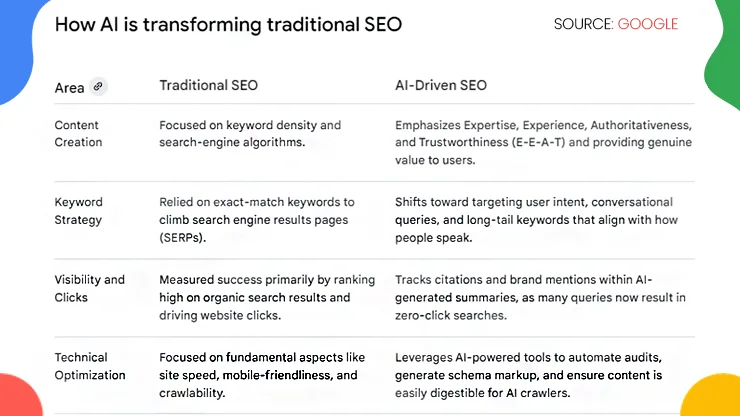
AI Search vs. Traditional SEO
Characteristics of AI Search
As AI continues to revolutionize the way we search online, it is essential to understand its defining characteristics that set it apart from traditional SEO practices. AI search is characterized by:
- Contextual Understanding: AI algorithms analyze not just the keywords but also the context surrounding a query. They leverage natural language processing (NLP) to ensure that users receive results that resonate with their intent.
- Predictive Capabilities: AI can anticipate user needs by analyzing patterns of behavior and preferences. For instance, if you frequently search for vegan recipes, AI will be more likely to prioritize content related to vegan cuisine in future searches.
- Dynamic Learning: The beauty of AI search lies in its ability to evolve continuously. It learns from interactions, refining its approach to deliver increasingly relevant results over time.
- Rich Media Integration: AI can integrate various forms of media like images, videos, and local listings, offering a multi-faceted search experience that traditional SEO lacks.
Advantages and Limitations of Traditional SEO
While traditional SEO has been the backbone of digital marketing for years, it has its own set of advantages and limitations: Advantages:
- Structured Approach: Traditional SEO relies on established practices such as keyword research, link building, and on-page optimization, providing a clear roadmap to follow.
- Visibility Control: Businesses have more control over their search visibility by strategically selecting keywords and optimizing their content accordingly.
Limitations:
- Static Keyword Focus: Traditional SEO often leans too heavily on specific keywords, which can hinder the ability to capture nuanced user intent.
- Slow Adaptation: As search engine algorithms evolve, traditional SEO strategies can become rapidly outdated if they do not keep pace.
In summary, while traditional SEO lays a robust foundation for online visibility, the transition to AI search represents an exciting opportunity for refining SEO strategies. The future lies in understanding and leveraging AI to meet ever-changing user expectations, ultimately enhancing the search experience for everyone involved.
The Role of AI in Search Results
Personalization and User Intent in AI Search
In today’s digital landscape, personalization has become a cornerstone of effective search results, thanks in large part to AI technology. AI search enhances the user experience by understanding the intricacies of user intent and tailoring results accordingly. Think of it this way: imagine searching for “best Italian restaurants.” An AI-driven search engine won’t merely present a list of restaurants; instead, it can discern whether you seek fine dining options, casual eateries, or perhaps even delivery services. This level of personalization stems from several factors:
- User History: AI algorithms analyze previous searches and click behavior to deliver results that align with a user’s preferences.
- Geolocation: AI can incorporate geographical data to serve up relevant suggestions based on where a user is located, making the search results more applicable.
- Context Understanding: The technology can interpret the context surrounding a query—what may be important to a user today could differ from yesterday.
By prioritizing personalized content, AI reshapes how users engage with search results, making the process not only efficient but also more satisfying.
Ranking Factors in AI Search Algorithms
As search engines evolve, understanding the ranking factors in AI search algorithms becomes increasingly vital for businesses aiming to optimize their online presence. Unlike traditional SEO, AI prioritizes a range of unique factors:
- User Engagement Metrics: Metrics such as click-through rates (CTR), bounce rates, and time spent on a page weigh heavily in AI algorithms. High engagement levels indicate quality content, which can boost rankings.
- Content Relevance and Quality: AI evaluates not just the keywords, but also the overall quality and relevance of the content to user queries. Well-researched, informative content garners better rankings.
- Semantic Relationships: AI searches depend on understanding semantic relationships between words and phrases—this means that content with natural language and contextual relevance has greater chances of ranking higher.
The seamless integration of personalization and these sophisticated ranking factors in AI search makes it essential for businesses to adapt. Embracing these advancements not only enhances SEO strategies but serves to elevate user experiences, driving meaningful engagement in an ever-evolving digital marketplace.
Implications for SEO Strategies

Adaptations Required for AI Search
As businesses navigate the changing landscape brought about by AI search, it’s crucial to adapt their SEO strategies to remain competitive. Unlike traditional SEO, which heavily relies on keyword placement, AI search requires a more holistic approach that emphasizes content quality and user intent. Here are some adaptations that can be instrumental:
- Focus on Content Quality: Invest in creating high-quality, well-researched content that answers user queries effectively. AI excels at evaluating the depth and relevance of content, so aim for in-depth articles that provide real value.
- Embrace Natural Language: Craft content that mimics natural conversation rather than simply targeting keywords. This strategy helps align with AI’s ability to understand user intent and context.
- Utilize Structured Data: Implementing structured data (schema markup) enhances content visibility and helps search engines better interpret your content, which is vital for AI algorithms.
- Monitor User Behavior: Keep an eye on engagement metrics, such as time on site and bounce rates. High engagement signals to AI that your content is valuable, potentially improving rankings.
Balancing Traditional SEO Tactics with AI Requirements
While adapting to AI search is essential, businesses shouldn’t completely abandon traditional SEO tactics. Instead, a balanced approach is necessary to achieve optimal results. Here are a few points to consider in this balance:
- Keyword Research Remains Key: Though less important than before, keyword research still plays a role in understanding what terms your audience uses. Use this knowledge to inform content topics rather than simply stuffing them into articles.
- Backlinks Still Matter: Building high-quality backlinks continues to be a significant ranking factor. Focus on obtaining backlinks from reputable sites, as these can signal authority and bolster rankings alongside AI-driven improvements.
- Integrate User Experience (UX): AI search prioritizes user experience, making UX enhancements vital. Ensure your website is mobile-friendly, easy to navigate, and visually appealing.
In summary, balancing traditional SEO tactics with new AI requirements enables businesses to optimize their strategies effectively. By staying agile, responsive, and committed to quality, organizations can not only enhance their search visibility but also meet the evolving expectations of users, ultimately driving sustainable growth in today’s digital landscape. Ask us about our SEO services in Tallahassee.
Future Trends in Search Optimization
Predictions for the Future of AI Search
As we look ahead, the future of AI search is poised for remarkable evolution, dramatically reshaping how users interact with digital information. Several trends are emerging that businesses and marketers should keep an eye on:
- Hyper-Personalization: Expect to see even more personalized search results. AI will be adept at analyzing individual user behaviors and preferences, leading to tailor-made content that speaks directly to user needs and interests.
- Conversational Search: With the rise of voice-activated devices, conversational search will gain prominence. Users will likely engage in more natural language queries, prompting businesses to optimize content in a way that answers these spoken questions effectively.
- Visual and Video Search Growth: As technology evolves, the integration of visual and video search capabilities will become commonplace. More users will search using images or videos, making it essential for businesses to properly optimize their visual content.
- AI-Driven Content Creation: Tools that use AI to help create content will become more sophisticated. Businesses may leverage AI for generating ideas, drafting articles, or even optimizing existing materials for better search performance.
Potential Advancements and Challenges in SEO
While the advancements in AI search bring exciting opportunities, there are challenges to consider as well:
- Content Authenticity: As AI tools generate content, ensuring originality and authenticity becomes vital. Businesses must maintain their unique voice and perspective to stand out amidst a sea of generated content.
- Algorithm Complexity: As AI algorithms become more intricate, staying updated on ranking factors can become increasingly challenging. Businesses may need to invest in ongoing education and tools to adapt to the changes swiftly.
- Data Privacy Concerns: With hyper-personalization comes the responsibility of safeguarding user data. Striking a balance between personalized experiences and respecting privacy will be important for maintaining user trust.
In conclusion, embracing these future trends in AI search and acknowledging the challenges will be crucial for businesses wanting to thrive in the digital space. By staying informed and agile, marketers can transform their SEO strategies to meet the ever-changing demands of users, ensuring sustained relevance and success in a rapidly evolving environment.
Conclusion
Summary of the Impact of AI on Traditional SEO
In reflecting on the conversation surrounding AI and traditional SEO, it is clear that AI has profoundly reshaped the digital marketing landscape. The shift from straightforward keyword-centric strategies to a more nuanced, user-intent-driven approach is not just a trend but a necessity for businesses aiming to remain relevant. Traditional SEO practices are far from obsolete, but they now coexist with AI capabilities that demand flexibility and innovation. Key impacts of AI on traditional SEO include:
- Enhanced Personalization: Users now expect relevant search results tailored to their specific needs, compelling businesses to invest in quality content that genuinely addresses user intent.
- Dynamic Content Strategy: Unlike earlier methods that revolved around static keyword placements, modern SEO requires agility, as AI algorithms continuously adapt and evolve based on user interaction and preference feedback.
- Emphasis on Engagement Metrics: Traditional ranking factors like backlinks and keywords are now complemented by user engagement metrics, which signal the quality of a website to AI systems.
Closing Remarks on the Future of Search Optimization
Looking ahead, the future of search optimization promises to be dynamic and challenging yet filled with opportunities. As AI technology continues to advance, businesses must not only adapt to its demands but also embrace the cultural shift towards hyper-personalization and holistic engagement. A few closing thoughts to keep in mind:
- Businesses that prioritize high-quality, user-focused content will thrive in this AI-driven landscape.
- There will be an ongoing need for companies to address data privacy concerns, balancing personalization with users’ rights to confidentiality.
- Continuous learning and adaptation will be essential; the ability to pivot strategies based on AI advancements will set successful businesses apart from their competitors.
Ultimately, the journey towards effective search optimization is ongoing, and the intersection of traditional SEO and AI is where innovation will flourish in the coming years. By committing to these practices, businesses can harness the best of both worlds.