


For small business owners and marketers, keyword relevance is one of the clearest signals that your content matches what real people want to find. It is not just about inserting target phrases into a page. It is about aligning a topic, a page structure, and a searcher’s intent so your content earns attention instead of merely being indexed.
Too many teams still treat keyword relevance as a volume game. They chase broad terms, repeat them too often, and hope rankings follow. Google’s current guidance points in a different direction: create helpful, reliable, people-first content, avoid manipulative practices like keyword stuffing, and make pages genuinely useful for the audience they serve.
That is why keyword relevance matters so much for US small businesses. When your page reflects the language, needs, and stage of the buyer journey behind a query, you improve the odds of attracting visitors who actually convert. Relevance also helps you decide which pages deserve support from internal links, stronger topical coverage, and earned authority from backlinks.
Many articles stop there, but that leaves out the part that matters in practice: how to build a system. Small businesses need a process that connects keyword research, content production, site structure, and authority building. That process should help you publish pages that rank for the right searches, satisfy users, and support business goals without slipping into keyword stuffing or weak, repetitive copy.
A useful way to think about search performance is this: rankings improve when your page answers the right question in the right depth for the right audience. Search engines evaluate signals tied to relevance, quality, and trust. Google’s people-first guidance emphasizes that content should show experience, expertise, and a clear purpose for readers rather than being created mainly to manipulate rankings.
For entrepreneurs, that changes the way content should be planned. The goal is no longer “pick one phrase and repeat it.” The goal is to build a topic-led page that reflects how customers search, what they expect to learn, and what proof they need before taking action. In other words, a page should feel complete to the reader.
The practical payoff is substantial. When a page matches intent, users stay longer, engage more naturally, and are more likely to move into your funnel. A service page aligned with commercial intent can drive leads. A blog post aligned with informational intent can build awareness and earn links. A comparison page can help users evaluate options before a buying decision. Relevance tells you which of those assets to build and how to shape them.
What Search Engines Actually Reward
Search engines do not reward pages simply because they contain a target phrase. They reward pages that appear useful, trustworthy, and appropriately focused on a query. Google’s SEO Starter Guide and helpful-content guidance both stress that content quality and user usefulness matter more than mechanical optimization tricks.
That means a strong page usually includes several elements working together:
A clear topic focus. A page should answer one primary need well, rather than trying to rank for everything at once.
Intent alignment. The format must match the query. Someone searching “how to choose CRM software” expects education. Someone searching “best CRM for small law firms” is further down the funnel and likely wants comparison, proof, and options.
Depth without filler. The page should cover the subtopics users expect, but without bloated introductions, generic statements, or copied competitor structure.
Evidence of experience and trust. This is where E-E-A-T becomes useful in practice. A business can strengthen trust by showing real examples, expertise, original insight, transparent author information, and accurate claims grounded in reality. Google’s helpful-content documentation explicitly pushes creators toward reliable, people-first content and away from pages built primarily for ranking manipulation.
A natural language pattern. Search engines are much better at understanding topics, related entities, and context than they were in earlier eras of SEO. That reduces the value of rigid repetition and increases the value of comprehensive, readable coverage.
This is also where many small business sites get stuck. They know they need SEO strategies, but they treat optimization as a final editing step instead of a planning system. The better approach is to start with audience problems, then use keyword research to map those problems into content assets.

Keyword Relevance and Search Intent: The Core Match
At its best, search optimization is a matching exercise. A user has a need, a search reflects that need, and your page either solves it or does not. When it does, rankings become more sustainable because the page is not depending on thin tactics.
Search intent usually falls into four practical buckets:
Informational: the user wants to learn. Commercial: the user is comparing options. Transactional: the user is ready to act. Navigational: the user wants a specific brand or page.
A small business often loses rankings because it builds one page and expects it to serve all four intents. For example, a homepage should not try to perform as a beginner guide, a service explainer, and a software comparison all at once. Splitting those needs into dedicated pages usually improves clarity for both users and search engines.
This is why keyword research should be treated as demand research. It is not just a list of terms. It is a way to understand how your market describes problems, evaluates solutions, and signals readiness to buy. Google’s SEO Starter Guide reinforces that SEO should improve your site’s presence by making it more useful and understandable, not by gaming the system.
Keyword Clustering Helps You Build Smarter Pages
A modern content plan should rely on keyword clustering instead of one-keyword-per-page thinking. Clustering groups closely related queries by shared intent, topic overlap, and likely search expectations. This allows one strong page to address a family of searches rather than fragmenting your authority across thin articles.
For example, a small business writing about local SEO might group related terms around local rankings, Google Business Profile optimization, reviews, and local citations. Those ideas belong together because users exploring one often need the others. Clustering helps shape a page around a topic rather than a single exact-match phrase.
This matters because many businesses accidentally create internal competition. They publish multiple short posts that target nearly the same query, each with weak differentiation. The result is keyword cannibalization, diluted links, and scattered engagement signals. A stronger cluster model solves that by deciding which page is the main authority asset and which supporting pages feed into it.
An effective cluster usually includes:
A primary page focused on the broad topic. Supporting pages that cover narrower subtopics. Internal links that make the topical relationship obvious. Consistent terminology and framing across the cluster. Distinct intent for every URL.
This approach also helps with E-E-A-T. A site that covers a subject with clear depth and logical organization looks more trustworthy than a site with disconnected articles and repetitive phrasing. It signals that the business understands the topic well enough to structure it.
Keyword Strategy That Fits Small Business Reality
A good keyword strategy is not about finding the “perfect” term. It is about finding realistic opportunities your business can serve better than larger competitors. That means balancing relevance, intent, competition, conversion value, and content feasibility.
For small businesses, a practical process looks like this:
Start with services, products, and customer questions. List the problems people bring to you, the language they use, and the outcomes they want.
Segment by funnel stage. Some searches introduce the problem. Others compare providers. Others indicate purchase intent. Each stage deserves different content.
Filter by winnability. Broad, high-volume terms can be useful, but long-tail searches are often more realistic and more profitable. They tend to reveal clearer intent and lower competition.
Map one main intent to one page. This prevents overlap and makes optimization cleaner.
Plan support from authority signals. Pages in competitive spaces often need more than on-page optimization. They also need credible backlinks, internal support, and stronger proof elements.
One useful outside reference on this point is the beginner-focused keyword strategy guide on IntelliPlans, which emphasizes organizing, selecting, and implementing search terms in a structured way rather than stuffing them into content.
The key difference between a weak and strong strategy is prioritization. Weak strategy chases traffic. Strong strategy chases qualified demand. If a page draws fewer visits but better leads, it usually produces more business value.
E-E-A-T Is Not a Checkbox
E-E-A-T is often discussed like a formula, but for a small business it is better understood as a trust framework. It helps you ask whether your page sounds credible, reflects real experience, and gives users confidence to act.
Google’s documentation does not describe E-E-A-T as a direct ranking score applied in isolation. Instead, it consistently points creators toward helpful, reliable content that demonstrates real value and trustworthiness.
For a small business article, E-E-A-T can be strengthened by:
Using real examples from client work or industry experience. Showing who wrote or reviewed the piece. Including specifics instead of vague advice. Explaining tradeoffs and limitations honestly. Linking out to credible, non-competing resources when useful. Keeping claims factual and current.
This is where many AI-assisted articles fail. They sound polished, but not lived-in. They summarize familiar advice without adding insight. Search engines may not “see” authenticity in a human sense, but users do, and that affects performance. Thin pages rarely earn trust, links, or conversions.
Backlinks Still Matter, but Relevance Matters More Than Volume
Backlinks remain part of how authority is built on the web, but small businesses should not pursue them as a detached metric. A good link profile supports pages that already deserve visibility because they are useful, relevant, and well targeted.
The vendor site you provided repeatedly emphasizes link relevancy, durability, and authority as practical ranking factors for small businesses, especially when links reinforce strong content and site structure.
That perspective aligns with reality. A page can be technically optimized and still struggle if it has no authority support in a competitive market. But the answer is not random link acquisition. The answer is relevant backlinks pointing to pages that are worth ranking.
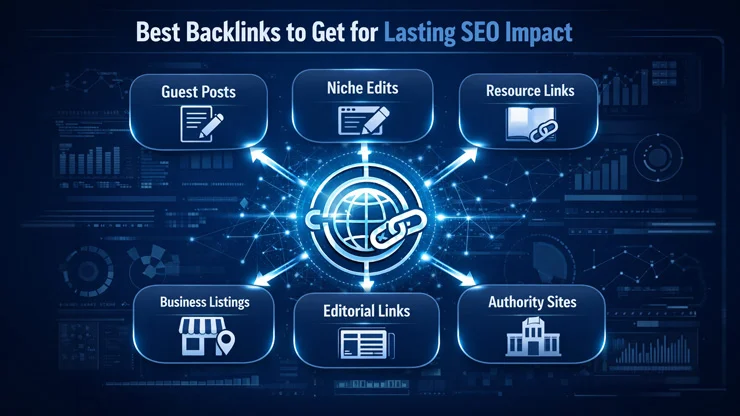
A smart backlink plan usually includes:
Linkable assets such as useful guides, original data, or practical tools. Service pages supported by surrounding informational content. Outreach targets with topical overlap. Anchor text that stays natural. A focus on editorial context, not just domain metrics.
For a small business, relevance compounds. Relevant content earns relevant engagement. Relevant engagement makes link outreach easier. Relevant links strengthen the pages most likely to convert. This is much healthier than building isolated links to disconnected pages.
Keyword Density and Keyword Frequency: Useful Signals, Bad Goals
Keyword density and keyword frequency still appear in SEO discussions because they are easy to measure. The problem is that they are often mistaken for goals. They should be treated as diagnostics, not targets.
If a page never uses the core language of the topic, that can be a problem. But if a page is written naturally around a clear subject, the language usually takes care of itself. Chasing fixed percentages leads to awkward copy and weak user experience.
Google’s spam policies are explicit that keyword stuffing means filling pages with keywords or numbers in an attempt to manipulate rankings, often unnaturally or out of context.
So what should marketers do instead?
Use the main phrase where it helps orientation: title, headings when appropriate, opening section, metadata, and naturally in the body. Use related terms where they fit the topic. Make sure the page covers the concepts users expect. Read the copy aloud. If it sounds forced, it probably is.
A page can rank with lower visible repetition if it better satisfies intent and covers the subject well. That is why strict density formulas are outdated. They optimize for counting, not for usefulness.
Why Keyword Stuffing Still Hurts
Many small businesses do not think they engage in keyword stuffing because they are not hiding text or repeating a phrase fifty times. But stuffing can also look like awkward internal links, unnatural headings, repetitive intros, or boilerplate paragraphs inserted only to include a term.
The damage shows up in several ways:
The content becomes harder to read. Users lose trust because the page sounds written for search engines. Important ideas get crowded out by repetitive language. Search engines may interpret the page as manipulative or low quality.
This is especially common when teams outsource content without a strong brief. Writers are told to hit a phrase count instead of solving a problem. The result is an article that looks optimized in a spreadsheet but underperforms in the real world.
A better editorial brief should define:
The target audience. The search intent. The main questions to answer. The proof or examples to include. The related terms worth covering. The conversion action at the end.
That framework produces content that reads naturally and still performs well in search.
Keyword Research as Customer Research
Strong keyword research begins outside the SEO tool. Your best inputs often come from sales calls, support conversations, reviews, competitor analysis, and on-site search behavior. Those inputs reveal how customers describe urgency, confusion, and desired outcomes.
Then SEO tools help validate patterns:
What terms have meaningful search demand? Which phrases show informational versus commercial intent? Where is competition realistic? Which SERP features appear? What subtopics show up in ranking pages?
This is where your competitor example is useful. Rather than copying its framing, you can study what it covers, what it leaves out, and how to make your own piece more practical for small business readers. The opportunity here is clarity. Many high-ranking SEO posts explain relevance conceptually but do not tell owners how to operationalize it across site architecture, content briefs, and link support.
That is the gap a better article should fill.
A Practical Content Workflow for Small Teams
Most small businesses do not have a large editorial staff. They need a repeatable process they can run monthly without wasting budget. A workable workflow looks like this:
Choose one business priority. Example: more leads for a core service.
Identify one primary page and two to four supporting assets. Example: one service page, one buyer guide, one FAQ page, and one case-study-style article.
Cluster related terms by intent. Use one page for the broad topic and supporting pages for narrower questions.
Write the primary page first. Make it the strongest answer to the core need.
Add proof. Testimonials, examples, screenshots, author information, or original observations increase trust.
Support with internal links and selective backlinks. Authority is easier to build when the content system already makes sense.
Measure business outcomes, not rankings alone. Track leads, assisted conversions, engagement, and page progression alongside visibility.
This process is usually more effective than publishing ten thin blog posts with overlapping language.
Where Lifetime Backlinks Fits Into the Strategy
For businesses competing in crowded verticals, on-page work alone may not be enough. Pages often need authority support, especially in niches where established competitors already own the top results. That is where a provider like Lifetime Backlinks can fit into the broader plan when used to support relevant, well-built pages rather than as a substitute for quality content.
The practical benefit is not just “more links.” It is getting the right pages reinforced so your strongest content has a better chance to rank. A smart campaign pairs link acquisition with page quality, topical fit, and internal structure. Otherwise, the links have less to amplify.
For readers who want complementary perspectives, IntelliPlans has beginner-friendly resources on keyword planning and on the risks of overusing search terms, which can help teams create cleaner briefs and avoid common on-page mistakes.
The Best SEO Strategies Balance Relevance, Trust, and Authority
The most durable SEO strategies do not treat optimization as a trick. They treat it as alignment:
Alignment between audience need and page intent. Alignment between topic coverage and search expectations. Alignment between expertise and the advice presented. Alignment between authority signals and the pages that deserve them.
That is why the strongest pages are often easier to read, easier to trust, and easier to link to. They are not trying to game the system. They are trying to solve the searcher’s problem better than competing pages.
For small business owners, this is good news. You do not need the biggest site to compete. You need a clearer content model. Focus on relevance first, then strengthen the pages that matter with better structure, stronger proof, and selective authority building.
When that foundation is in place, rankings become less fragile. Your pages are more likely to survive updates because they are built on usefulness instead of formula. Your content also becomes easier to scale because each article has a role inside a wider topic and conversion strategy.
The practical takeaway is simple: build fewer pages, make them better, and connect them to the right supporting signals. That approach gives you a stronger path to visibility than chasing vanity metrics or repeating the same keyword until the copy breaks.