
“What Is the Click-Through Rate?”
In the highly competitive world of search engine optimization, ranking on the first page of Google is only half the battle. You can hold the third position for a high-volume keyword, but if searchers find your listing unappealing or irrelevant, they will simply scroll past it. This brings us to a critical performance metric: Click-Through Rate (CTR).
For any business, understanding and optimizing CTR is essential. High-quality backlinks help you climb the rankings, but CTR ensures those rankings actually translate into visitors, leads, and revenue. When you understand what is the click-through rate (CTR) and how to influence it, you gain a massive advantage over competitors who focus solely on positions rather than people.
Defining the Metric: What Is the Click-Through Rate (CTR)?
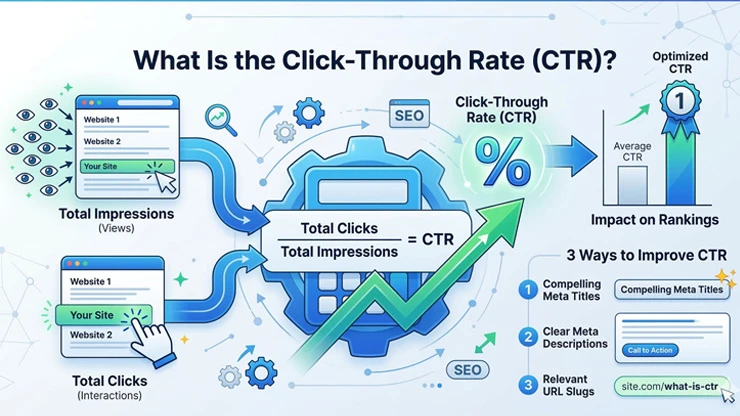
Click-Through Rate is a digital marketing metric that measures the ratio of users who click on a specific link to the total number of users who view it. In the context of SEO, your organic CTR represents the percentage of people who see your website in the search engine results pages (SERPs) and choose to visit your site.
The Standard CTR Formula
Calculating your click-through rate is a matter of simple division. You divide the total number of clicks by the total number of impressions, then multiply by 100 to get a percentage.
For example, if your guide on building authority appears in search results 1,000 times (impressions) and receives 50 clicks, your CTR is 5%. While this seems basic, the implications for your bottom line are profound. If you can move that 5% to 10%, you effectively double your traffic without needing to build a single new page or move up one ranking spot.
Why Organic CTR is the Secret Lever of SEO
Many professionals in the search industry believe that CTR is more than just a traffic report. It acts as a powerful feedback loop for both your marketing strategy and search engine algorithms.
1. The Relationship Between Ranking vs. Clicks
Rankings are vanity; clicks are sanity. It is entirely possible for a page in position 4 to out-earn a page in position 2 if the metadata is better optimized for the user’s psychological triggers. By focusing on meta title optimization and compelling descriptions, you capture the “lion’s share” of the traffic regardless of the exact numerical rank.
2. Improving SERP Visibility
In 2026, the search engine results page is more crowded than ever. Between AI Overviews, sponsored ads, and video carousels, your “blue link” needs to fight for attention. High visibility doesn’t just happen; it is engineered through structured data and clear, benefit-driven messaging.
3. User Engagement Metrics as Quality Signals
Google’s goal is to provide the best possible answer to a user’s query. If users consistently click your link over others, it sends a strong signal that your content is highly relevant to that specific search intent. This positive engagement can create a “moat” around your rankings, making it harder for competitors to displace you.
Benchmarking: What Is a Good CTR in 2026?
A “good” click-through rate is highly subjective and depends on your industry, the type of query (branded vs. non-branded), and the presence of SERP features like AI Overviews or sponsored ads.
| Search Position | Baseline CTR (2026) |
| Position 1 | 20% – 28% |
| Position 2 | 10% – 15% |
| Position 3 | 7% – 11% |
| Position 4 | 5% – 7% |
| Position 10 | ~1.5% |
Industry Variance and Average CTR by Industry
It’s important to note that average CTR by industry varies wildly. For example, the legal and insurance sectors often see lower organic CTRs due to the high density of paid advertisements at the top of the page. Conversely, lifestyle and hobbyist blogs may see much higher click-through rates as users are more prone to “window shopping” through multiple organic results.
Advanced Strategies for Meta Title Optimization
Your title tag is the most influential element of your search snippet. It is the headline of your ad.
Front-Loading Keywords
Place your primary keyword near the beginning of the title. For this topic, starting a title with “What Is the Click-Through Rate?” ensures that both Google and the user immediately recognize the page’s relevance.
Power Words and Brackets
Use psychological triggers to encourage the click. Terms like “Proven,” “Complete Guide,” “Data-Backed,” or “2026 Update” provide a sense of freshness and authority. Including brackets—such as [Infographic] or [Free Template]—is a proven way to differentiate your link from a sea of plain text.
The Meta Description Impact: Selling the Click
While meta descriptions are not a direct ranking factor, their impact on user behavior is undeniable. Think of the title as the hook and the description as the closer.
Addressing Search Intent
Does the user want a quick definition or a deep dive? If the intent is informational, your description should provide a “teaser” of the answer. If the user is looking for a service, emphasize the solution.
Avoiding “Scammy” Language
In 2026, users are highly attuned to “clickbait.” Avoid aggressive, hyperbolic language that sounds like a late-night infomercial. Instead, focus on transparency and utility. Tell the user exactly what they will gain by clicking through to your site.
Technical Elements: SERP Visibility and Schema
To truly maximize your SERP visibility, you must look beyond text.
- Review Schema: If you are a service provider or product seller, showing star ratings directly in search results can boost CTR by up to 30%.
- FAQ Schema: Answering common questions directly in the SERP creates a larger footprint for your listing, pushing competitors further down the screen.
- URL Slugs: A clean URL like is much more trustworthy than a string of random characters.
Leveraging Google Search Console CTR Data
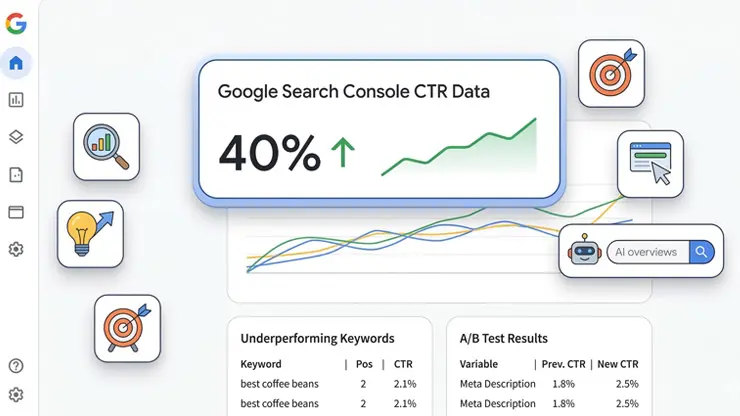
To improve, you must measure. Google Search Console CTR reports are the gold mine of SEO.
- Identify Underperformers: Look for keywords where you rank in the top 3 but have a CTR below the industry average. These are your biggest opportunities for quick wins.
- Test and Iterate: Change a meta description, wait two weeks, and measure the change in CTR. This data-driven approach removes the guesswork from your optimization efforts.
- Monitor AI Overviews: Track how your clicks change when Google provides an AI-generated answer for your target keyword.
How Lifetime Backlinks Enhances Your Organic Performance
At Lifetime Backlinks, they understand that SEO is an ecosystem. While we specialize in providing the high-quality backlinks necessary to reach the first page, we know that your success depends on what happens once you get there.
Brand Authority and Trust
There is a psychological component to clicking. Users are more likely to click on a website they recognize. By using a professional link-building services to place your brand on authoritative, niche-relevant sites, you are building “passive” trust. When a searcher sees your name in the SERPs, they are already familiar with your brand because they saw you mentioned on a top industry blog or news site.
Strengthening the Trust Factor
Building a robust backlink profile does more than just move your rank. It establishes your site as a pillar of the community. This perceived authority directly influences user engagement metrics. People trust authoritative sites, and they click on what they trust.
Sustainable Traffic Growth
Our approach focuses on quality dofollow links that provide long-term value. When combined with a strategy focused on improving your click-through rate, you create a compounding effect. Higher authority leads to better ranks, and better metadata leads to more clicks, which signals to Google that you deserve to stay at the top.
The Future of CTR: Adapting to 2026 and Beyond
As search engines evolve into “answer engines,” the definition of a click is changing. We are seeing a rise in “zero-click” searches, where the user finds their answer directly on the Google results page.
To thrive in this environment, your content must offer something that an AI snippet cannot: deep expertise, original data, and a unique brand voice. Optimizing for CTR is no longer just about getting a click; it’s about inviting the user into an experience that provides more value than a 50-word summary.
Ready to transform your search presence into a high-converting traffic engine? Explore a premium link-building website at Lifetime Backlinks and start building the authority your business deserves.