

Long‑tail keywords are crucial components in the landscape of SEO and PPC advertising. These keywords are characterized by their longer and more specific phrases, which potential customers tend to use as they get closer to making a purchase decision. Unlike their shorter counterparts, often referred to as head keywords, long‑tail keywords have lower search volumes, but they offer significant advantages when employed effectively.
For example, consider a small business selling eco‑friendly kitchen products. Instead of trying to rank for the broad term “kitchen products,” it could target long‑tail keywords such as “bamboo cooking utensils for eco‑friendly kitchens” or “biodegradable storage containers for meal prep.” These phrases, while less frequently searched, are far more likely to attract engaged visitors who are ready to buy.
Characteristics of Long‑Tail Keywords
- Specificity: They address particular queries, often indicating a buyer’s intent and informing your broader Keyword Strategy.
- Lower Competition: Due to their specificity, competition is less fierce, allowing smaller businesses to compete effectively with smart Keyword Research.
- Higher Conversion Rates: Visitors using long‑tail keywords are generally closer to the point of purchase, improving the likelihood of conversion.
In summary, long‑tail keywords serve as a tactical tool for businesses looking to enhance their website rankings, drive more qualified traffic, and increase their overall return on investment through targeted marketing strategies. By focusing on these keywords, brands can establish deeper connections with potential customers, ensuring that they are not lost in the noise of the crowded online marketplace. As you optimize, measure impact with Google Analytics and monitor visibility via Google Search Console.
The Functionality of Long‑Tail Keywords
Understanding how long‑tail keywords operate in search marketing can significantly transform a company’s approach to both SEO and PPC. These keywords play a pivotal role in connecting businesses with ready‑to‑buy customers, creating a bridge from search intent to action.
How Long‑Tail Keywords Operate in Search Marketing
Long‑tail keywords are tailored to meet the needs of specific searches. For instance, if someone types “best hybrid bicycles for commuting,” they are likely further along in their buying journey compared to someone searching for just “bicycles.” This specificity not only enhances the relevance of search results but also increases the click‑through and conversion rates for businesses targeting those terms. Validating these opportunities begins with thorough Keyword Research and prioritizing them inside your overarching Keyword Strategy.
Benefits of Using Long‑Tail Keywords
- Higher Relevance: By focusing on precise phrases, businesses can attract visitors whose interests align closely with their offerings.
- Improved ROI: Despite drawing less overall traffic than broad keywords, long‑tail keywords yield higher returns by connecting with more interested prospects and by informing smarter PPC bidding.
- Cost‑Effectiveness: The lower competition associated with long‑tail keywords often translates to reduced costs in paid campaigns, keeping budget expenditures efficient.
For example, a local bakery focusing on gluten‑free cupcakes may find that targeting “award‑winning gluten‑free chocolate cupcakes in [City Name]” brings in customers who are more likely to purchase than those searching for “cupcakes.” You can quantify these gains in Google Analytics and track impressions and queries in Google Search Console.
Introduction
In the diverse world of digital marketing, the terminology can sometimes feel overwhelming, especially when it comes to understanding keywords. Among the most influential types of keywords are long‑tail keywords. But what exactly are they, and why should they matter to your business?
Understanding Long‑Tail Keywords
Long‑tail keywords are longer and more complex search phrases that potential customers use when they’re closer to making a purchase decision. Instead of a single word or short phrase, like “shoes,” a long‑tail keyword might be “comfortable running shoes for flat feet.” This specificity means that users searching for long‑tail keywords often know exactly what they want, which makes them more likely to convert into loyal customers. Identifying these phrases starts with disciplined Keyword Research and aligning them with your Keyword Strategy.
Navigating the world of long‑tail keywords can feel challenging, but the rewards are substantial. Think of it this way: if a company selling outdoor gear targets the broad term “hiking gear,” it could get lost among countless competitors. However, by focusing on a phrase like “best lightweight backpacks for day hikes,” they can directly reach those eager to buy and improve their SEO performance.
Significance of Long‑Tail Keywords in SEO and PPC
The impact of long‑tail keywords in both SEO and PPC advertising is profound:
- Enhanced Targeting: Long‑tail keywords ensure that marketing efforts are precisely aimed at the audience that is ready to purchase.
- Lower Competition: Since these keywords are highly specific, businesses face less competition, leading to better ad placements and lower costs.
- Higher Conversion Rates: Someone entering a detailed phrase often signals they are further along in their decision‑making process.
For businesses looking to elevate their website rankings and connect authentically with customers, understanding and utilizing long‑tail keywords is essential. Use Google Analytics to tie these terms to on‑site behavior and conversions, and lean on Google Search Console to discover new long‑tail queries you already appear for.
What Are Long‑Tail Keywords?
When it comes to driving targeted traffic to your website, understanding long‑tail keywords is essential. These keywords play a pivotal role in search marketing, offering an effective strategy for businesses to connect with their customer base.
Definition and Characteristics
Long‑tail keywords are longer, more specific phrases that users typically enter into search engines when they know exactly what they’re looking for. For example, rather than searching for “shoes,” someone might search for “best waterproof running shoes for beginners.”
- Length: Usually consists of three or more words.
- Specificity: Targets a narrower audience, which often leads to higher conversion rates.
- Lower Search Volume: Generally has a lower search volume compared to short‑tail keywords but compensates with higher relevance and intent.
Using long‑tail keywords not only helps businesses reduce competition but also positions them favorably in search engine rankings through better Keyword Strategy decisions grounded in solid Keyword Research.
Differentiation from Short‑Tail Keywords
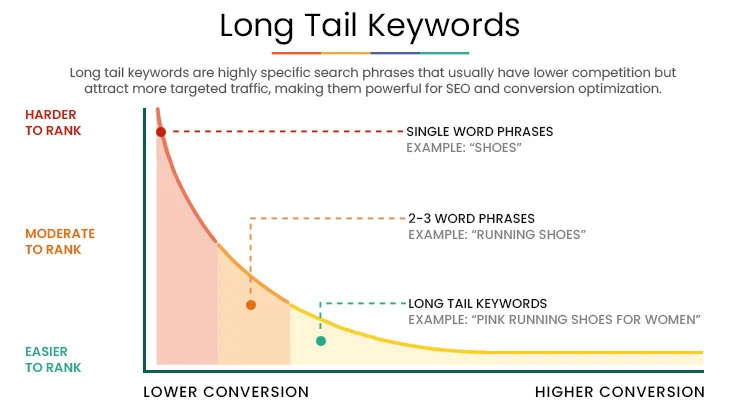
Short‑tail keywords, or head keywords, tend to be one or two words and cover broad topics. While they may attract a larger volume of traffic, the visitors they bring may not always convert since they have less defined intent.
- Traffic: Short‑tail keywords draw higher volumes but often with lower engagement, while long‑tail keywords yield lower volumes with highly engaged visitors.
- Intent: Users employing long‑tail keywords are typically further along in their buying journey, demonstrating clearer intent to purchase.
- Competition: Short‑tail keywords face fierce competition, making it harder for smaller businesses to rank effectively.
In summary, integrating long‑tail keywords into your SEO and PPC strategies can create opportunities for brands to connect meaningfully with their audiences while maximizing their marketing efforts.
The Functionality of Long‑Tail Keywords
As businesses strive to improve their online presence, understanding the functionality of long‑tail keywords becomes essential. These keywords not only shape search behavior but also significantly influence marketing strategies. You can surface the best performers by pairing Keyword Research with tracking in Google Analytics.
How Long‑Tail Keywords Operate in Search Marketing
Long‑tail keywords operate as a vital tool in connecting businesses with potential customers who are ready to make a purchase. When someone searches for something specific, such as “organic toddler pajamas for sensitive skin,” they are signaling intent. This is where long‑tail keywords shine:
- Targeted Audience: These phrases help attract users who are further along in the buying process, leading to a higher likelihood of conversion.
- Less Competition: Due to their specificity, long‑tail keywords face less competition, allowing even smaller businesses to rank higher in search engine results.
For instance, a local shop specializing in eco‑friendly products can leverage phrases like “biodegradable dog waste bags” to reach pet owners who prioritize sustainability, then validate performance in Google Search Console.
Benefits of Using Long‑Tail Keywords
- Higher Conversion Rates: Because users searching for long‑tail keywords know exactly what they want, they are more likely to complete a purchase.
- Cost‑Effective Advertising: In paid campaigns, bidding on long‑tail keywords typically results in lower costs per click, allowing businesses to maximize their PPC budget.
- Improved Performance Tracking: Tie keywords to goals and revenue in Google Analytics while monitoring query growth in Google Search Console.
There is no magical SEO formula for success. A reminder that long-term results come from quality work, not hacks.
Utilizing Long‑Tail Keywords Effectively
Importance for Targeted Traffic
One of the primary advantages of long‑tail keywords is their ability to drive targeted traffic to a website. People using specific phrases exhibit clear intent. For instance, if a consumer searches for “eco‑friendly yoga mats for beginners,” they are likely in the market for a purchase. Discovery starts with practical Keyword Research and continues with prioritization inside your Keyword Strategy.
Higher Relevance: By focusing on specific queries, businesses ensure that they reach users who are genuinely interested in their offerings. Reduced Bounce Rates: Since the traffic is more targeted, visitors are more likely to engage with the content.
Impact on Conversion Rates
Long‑tail keywords are not just about bringing in visitors; they play an essential role in conversion rates as well. Track the lift in engagement and sales inside Google Analytics and correlate rising impressions to queries in Google Search Console.
Higher Engagement: Visitors arriving through long‑tail searches typically have a clearer idea of what they want, leading to more meaningful interactions. Increased Sales: Pages optimized for long‑tail keywords frequently convert at higher rates than generic pages.
The 80/20 Rule and Long‑Tail Keywords
Explanation of the Distribution Graph
The long tail describes the distribution of search queries across the internet. A few popular terms gather massive search volumes, while the majority of searches happen on specific, low‑volume phrases. The head accounts for a small share of unique queries while the tail comprises the majority.
Implications for Search Behavior
- User Intent: Long‑tail users demonstrate clearer intent which often leads to higher conversions.
- Less Competition: Fewer businesses pursue specific phrases, enabling smaller companies to rank more effectively with focused SEO tactics.
- Cost Savings: In PPC, bidding on long‑tail keywords often results in lower CPC and stronger ROI.
Finding and Implementing Long‑Tail Keywords
Tools and Methods for Discovering Long‑Tail Keywords
Discovering long‑tail keywords can be as simple as employing a few strategic methods:
- Keyword tools: Start with disciplined Keyword Research to uncover intent‑rich phrases.
- Search suggestions: Use autocomplete and related searches to expand ideas that fit your Keyword Strategy.
- Measurement: Validate candidates with Google Analytics engagement data and discover new queries through Google Search Console.
Integrating Long‑Tail Keywords in Marketing Strategies
- Content: Infuse long‑tail phrases naturally into blog posts, service pages, and FAQs as guided by your Keyword Strategy.
- Ads: In PPC campaigns, group tightly themed keywords and tailor ad copy and landing pages to match.
- Optimization: Map target phrases to specific pages and track outcomes in Google Analytics while monitoring queries and CTR in Google Search Console.
Long‑Tail Keywords in Paid Advertising
Lower Costs and Higher ROI in Paid Search Marketing
One of the primary advantages of using long‑tail keywords in paid search is cost efficiency. Since these keywords are more specific, competition is typically lower, leading to reduced CPC and better alignment between intent and offer in your PPC programs.
Strategies for Winning Ad Rankings with Long‑Tail Keywords
- Targeted ad copy: Mirror the exact phrase in headlines and descriptions.
- Landing page alignment: Make sure pages reflect the same intent that your Keyword Strategy targets.
- Measurement: Tie ad groups to goals and revenue in Google Analytics for clear ROI reporting.
Conclusion
Leveraging long‑tail keywords is essential for enhancing visibility and achieving meaningful engagement in a crowded digital space. Build your plan on strong Keyword Research, prioritize with a clear Keyword Strategy, and connect efforts across SEO and PPC. Track performance in Google Analytics and discover new opportunities in Google Search Console to keep compounding results over time.